
Retainer
Optimizing the OOFOS Shopping Experience
Redesigning The shopping experience to drive conversions and repeat purchases while ensuring accessibility compliance.
Live Site oofos.com
Designed at The Stable, Part of Accenture Song
Services
UX Audit
Competitive Analysis
Wireframes
Interactive Prototypes
Design System Components
Design QA
ADA Compliance
A/B Testing
Team
Product Designer — TJ Hari
Brand Strategist — Kristen S.
Engineer — Owen D.
Tech Lead — Romain C.
Delivery Lead — Brayden T.
Overview
OOFOS makes recovery footwear with OOFoam technology that absorbs 37% more impact than traditional athletic shoes. When I joined their ongoing retainer, the site had UX friction causing cart abandonment and poor product discovery, along with widespread ADA compliance violations that put them at risk. The site required both UX optimization and full compliance remediation within the constraints of a tight monthly budget.
I collaborated with the strategy team to conduct UX and accessibility audits. We identified critical friction points throughout the shopping journey. I redesigned these key touchpoints to reduce abandonment, increase average order value, and improve the experience for returning customers, while bringing the site into full ADA compliance.
My Role
I owned UX optimization and ADA compliance for OOFOS digital storefront over a multi-year engagement.
I led the redesign of product pages, cart flows, account features, and discovery components based on audit findings and analytics within the constraints of tight monthly retainer budgets. I collaborated with strategy and engineering teams to prioritize changes that balanced quick wins with long-term improvements. My challenge was maintaining momentum across a multi-year retainer, continuously identifying high-impact optimizations and validating them through A/B testing to ensure measurable results.
Understanding The Problem
UX and accessibility audits revealed critical issues throughout the shopping experience. Users struggled with product discovery, abandoned their carts frequently, and returning customers lacked an optimized path to repurchase. Widespread accessibility violations excluded users and created legal risk. Unlike a typical project with a defined scope, this was an ongoing engagement requiring continuous prioritization, identifying which issues to tackle each month to maximize impact within tight budget constraints.
Approach
Creating The Product Vision
I created a phased roadmap showing how we'd tackle the most critical issues first while building toward a fully optimized experience. The vision prioritized high-impact improvements to product pages, cart flows, and discovery features, with accessibility compliance integrated throughout. Wireframes and prototypes communicated the direction for each phase, ensuring stakeholders understood both immediate wins and long-term goals.
Working with the strategy team, I established a prioritization framework based on impact, effort, and urgency. We prioritized areas with the highest drop-off rates, tackling high-impact, low-effort UX improvements first to build momentum and show quick wins. Critical accessibility violations were addressed in parallel to reduce legal risk. The improvements would compound over time, ensuring each optimization built on previous work. A/B testing was planned for major changes to validate decisions before scaling across the site.
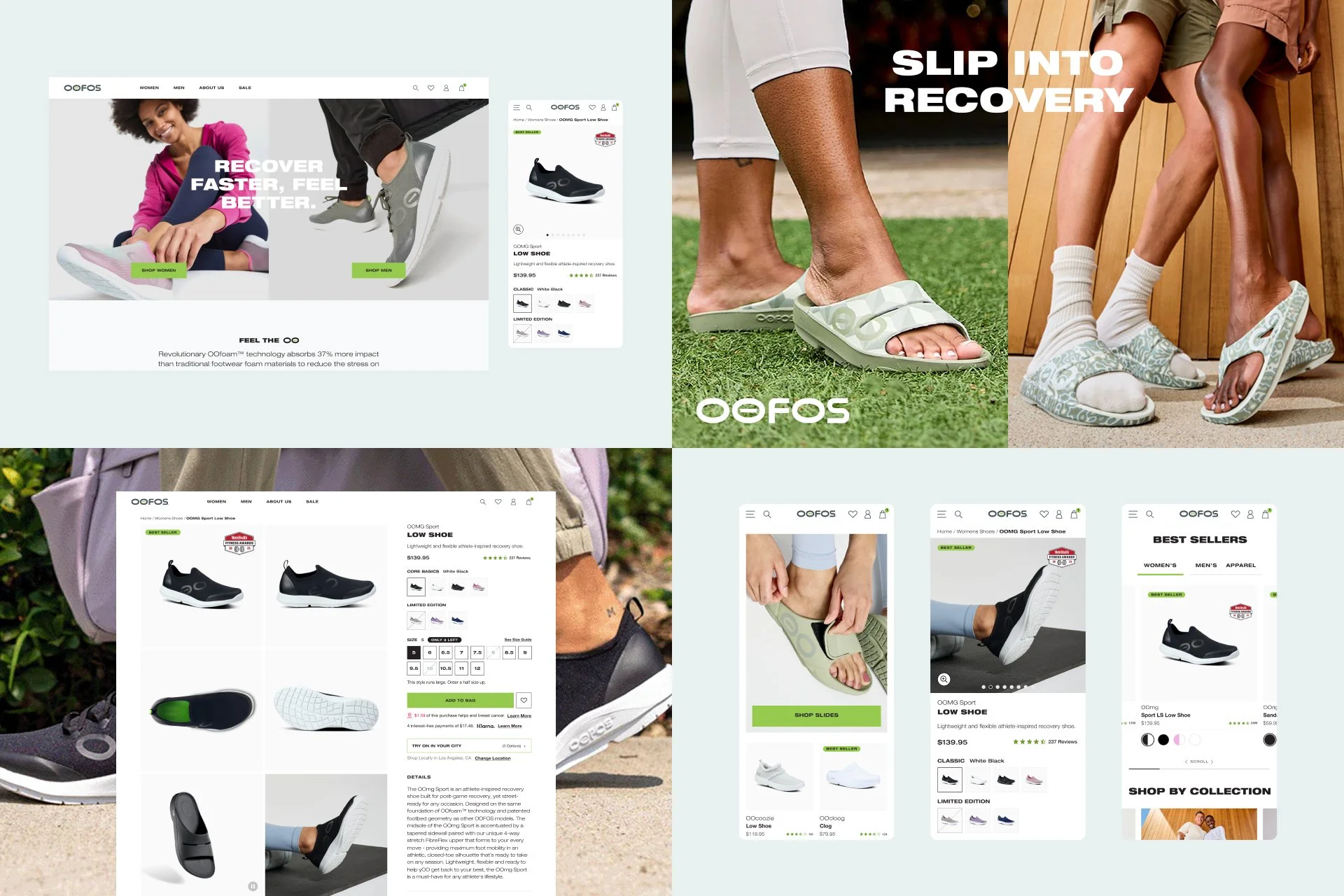
Designing The Solution
Product List Page
The improvements to the product card greatly impacted the product list page. Using lifestyle images for shop category links allows customers to browse products in a realistic setting and urges them deeper into the conversion funnel.
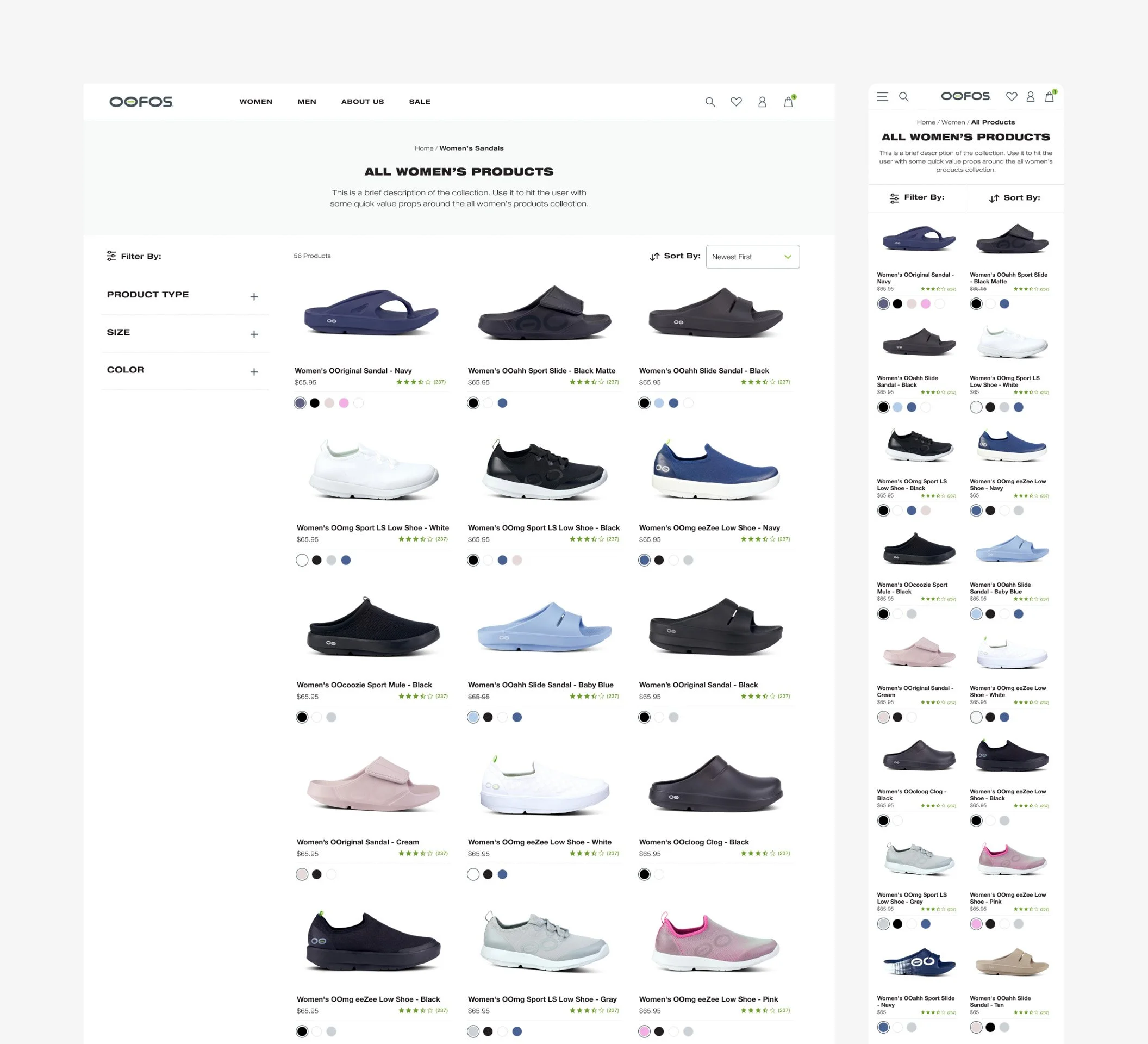
Before
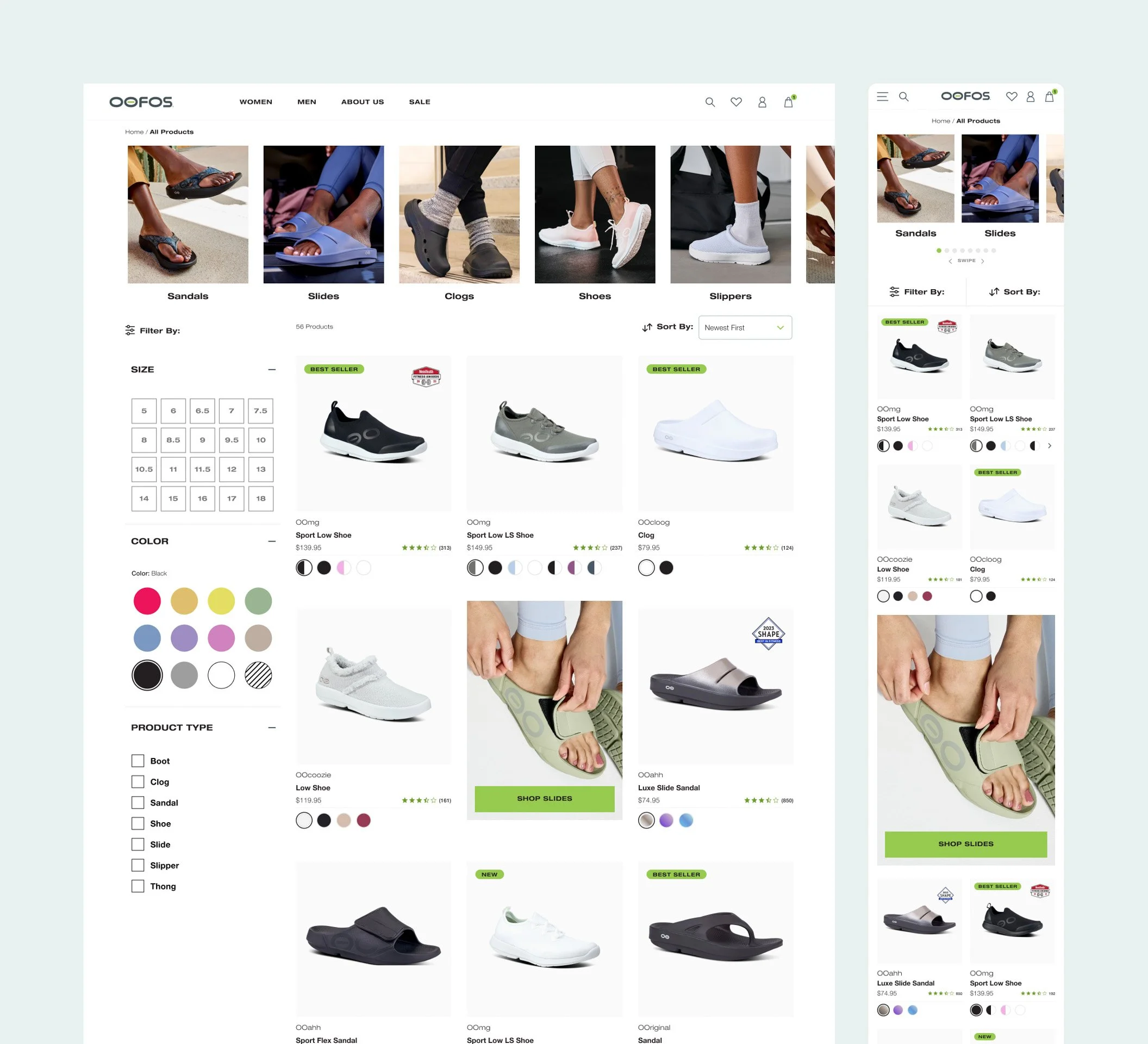
After
Improvements
Visual shop category links
Repositioned SEO copy to bottom
Product card redesigned
Added eyebrow product type
Breadcrumbs for navigation
Adding lifestyle imagery to product cards
Created promo tiles
Added product badges
Updated quickshop functionality
ADA compliance
Designing The Solution
Product Detail Page
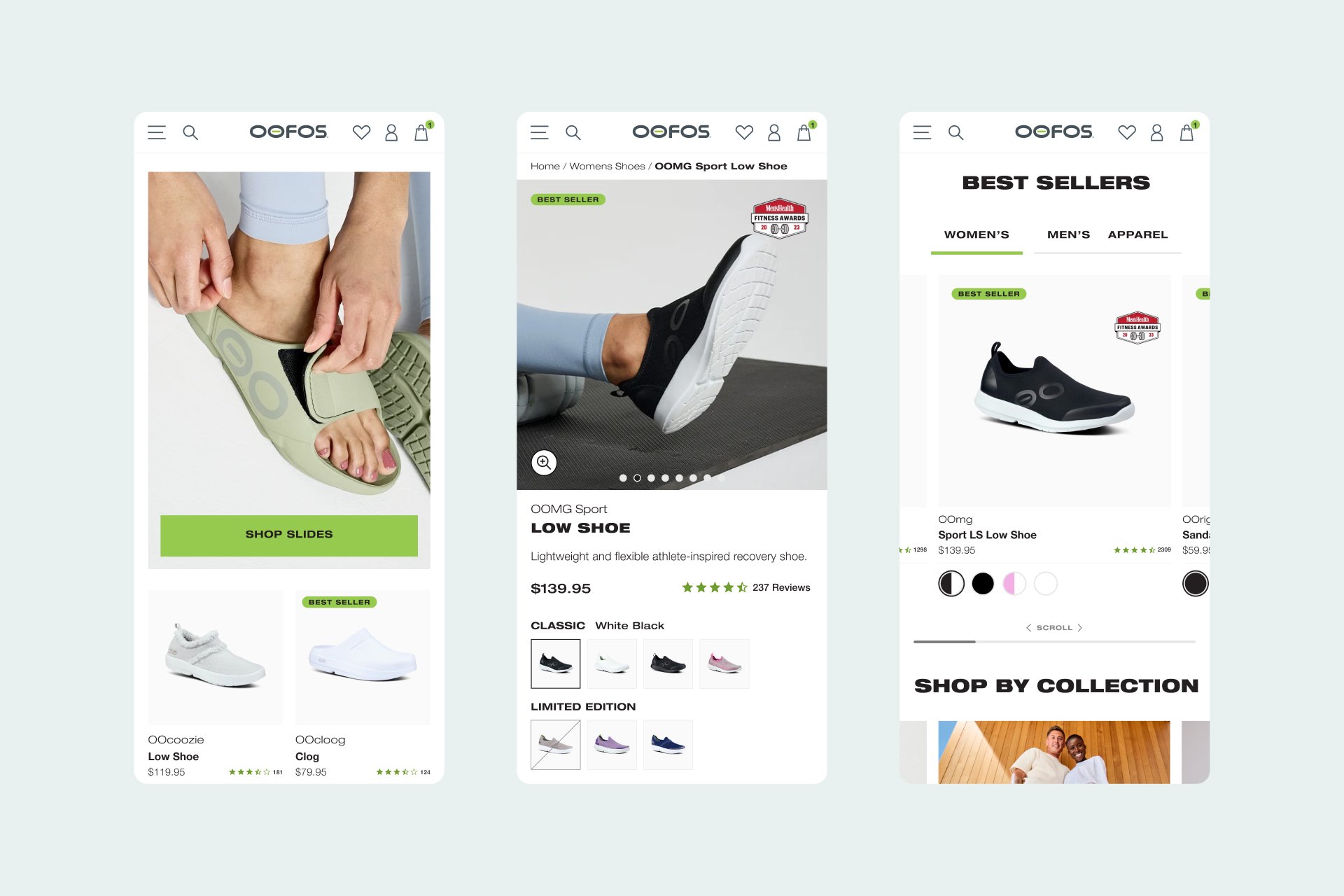
Above the fold I redesigned the OOFOS experience to have a more immersive visual product detail page with a image gallery style layout with video functionality. Updating the color variants to image thumbnails. I convinced the client to re-merchandise their product catalog to reduce naming length and increase SEO impact. Building a strategic, robust, and engaging page.
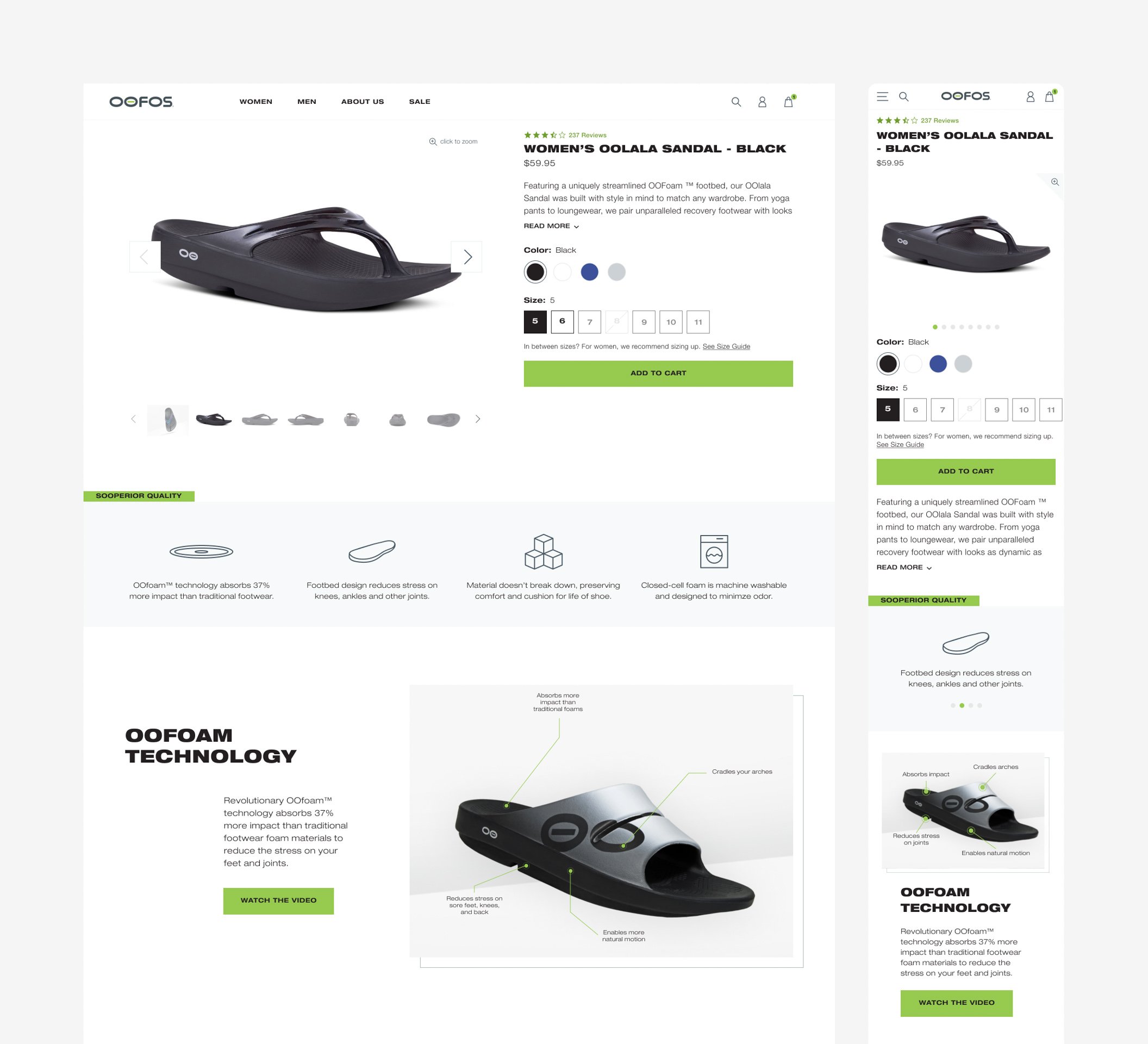
Before
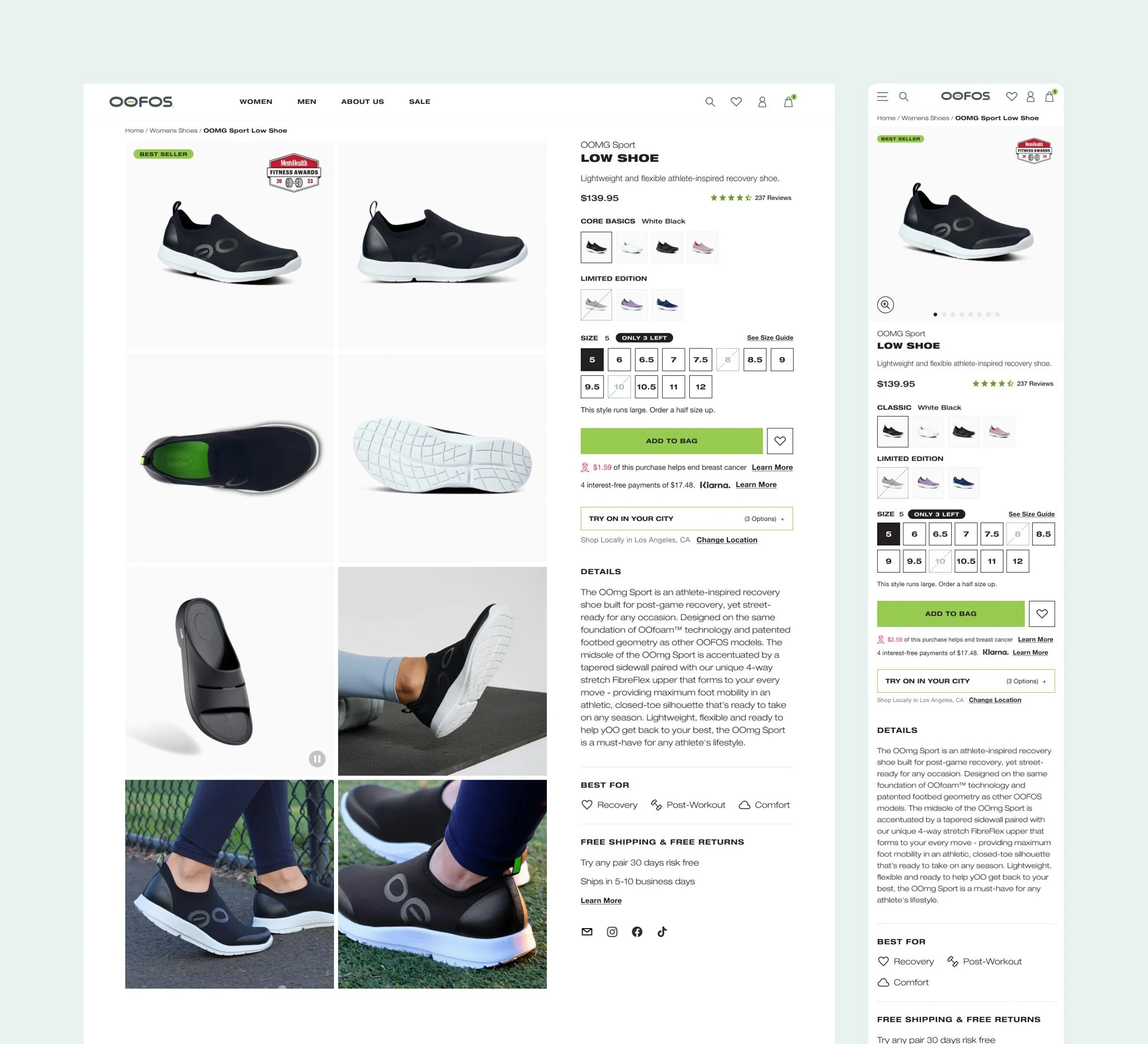
After
Improvements
Added eyebrow product type
Added Short description
Breadcrumbs for navigation
Image gallery style
Improved zoom modal experience
Updated swatches to image thumbnails
Added product & award badges
Tool tips for low stock
Added wishlist functionality
Created ‘Best For’ category icons
Shipping & returns modal
Approved for ADA compliance
Designing The Solution
Full Product Detail Page
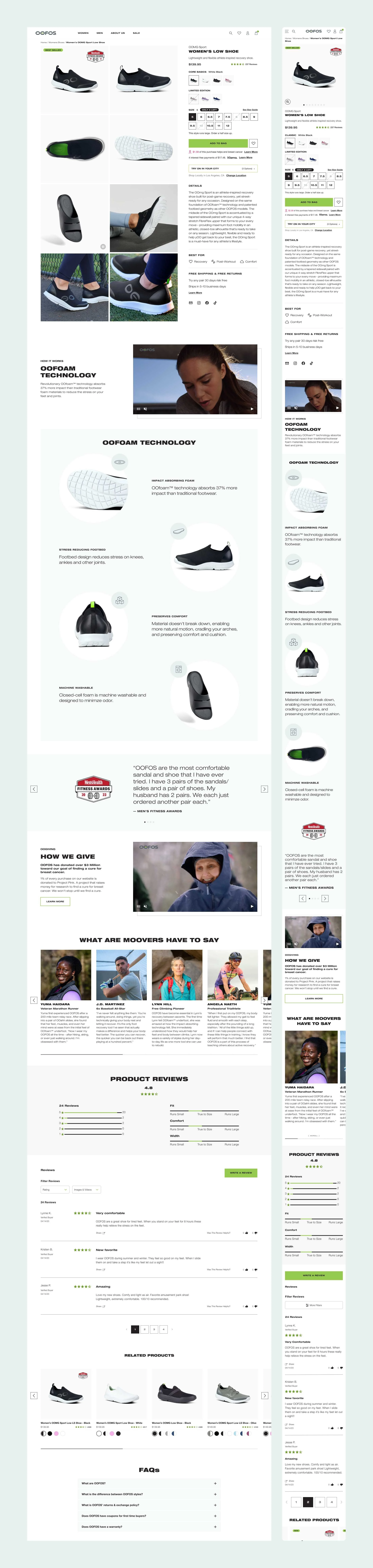
Further down the page I created many net-new sections to further build out content to support the products features and the OOFOS brand. Content includes product technology, testimonials, product awards, brand beliefs, reviews, related products, and FAQs all further supporting the credibility of the product.
-
![]()
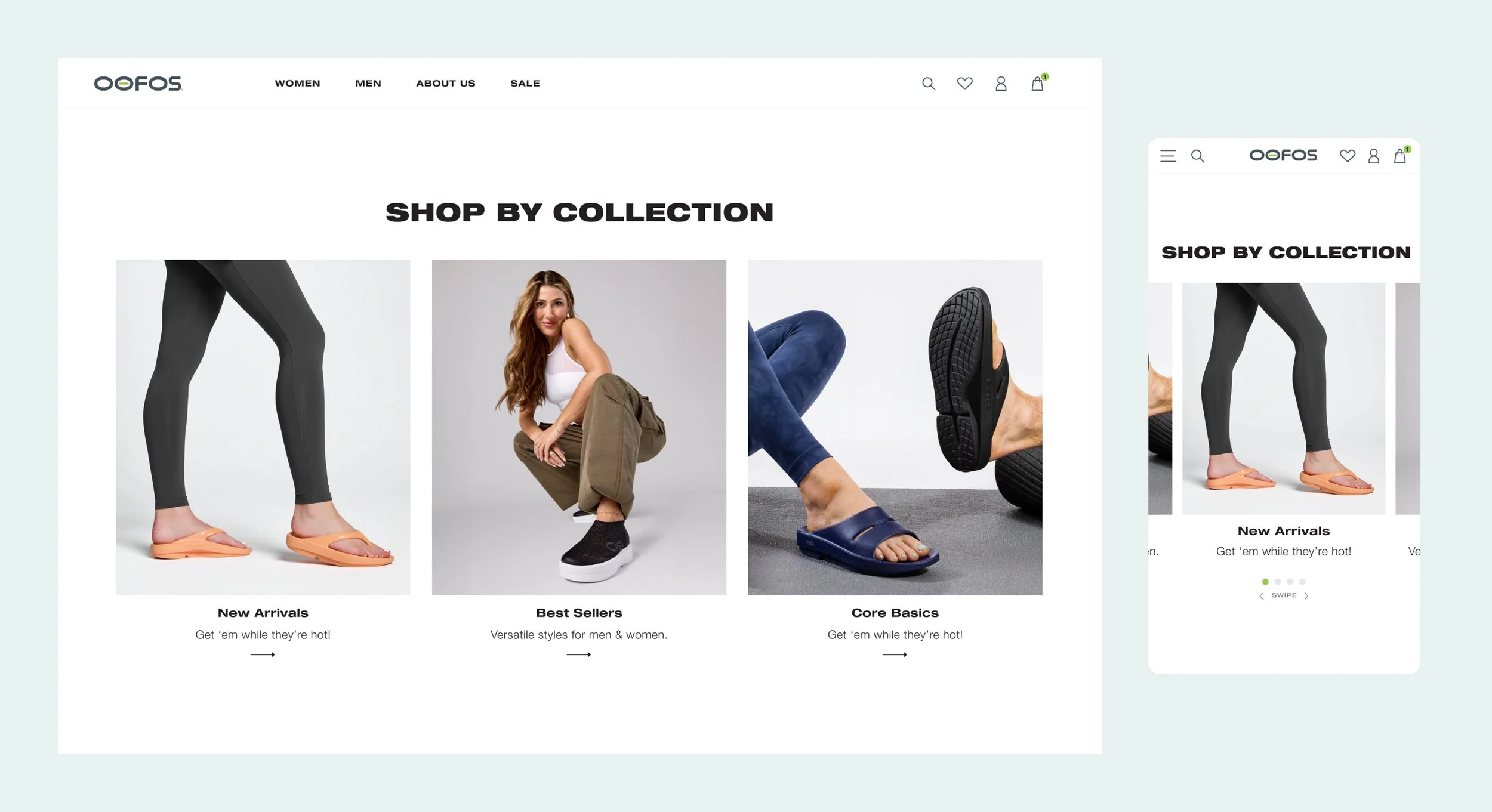
Shop Collection
Originally this section was restricted to only two collections women & men. We had the opportunity redesign with more flexibility accounting for 2-6 collections. Now powered with multiple merchandising options to target specific audiences if needed.
-
![]()
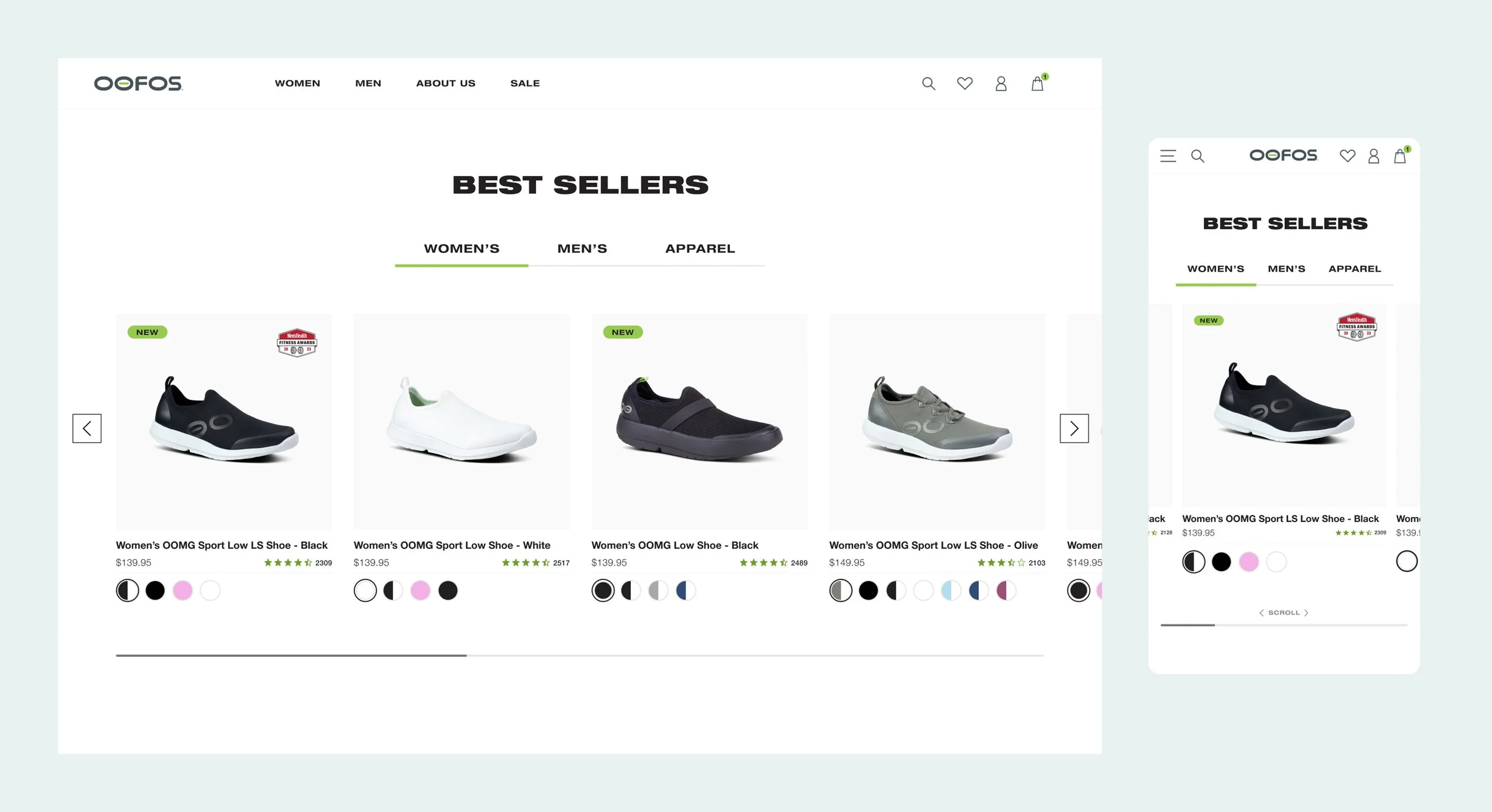
Tabbed Carousel
This section also limited to only one carousel of products. There was an opportunity to redesign the product card and add more tabs for deeper discovery for best selling products.
-
![]()
Mini Cart
The mini cart was redesigned to feel more aesthetically consistent with the overall OOFOS brand. In addition to adding upsell products based on similar size recommendations before customers continue to checkout.
-
![]()
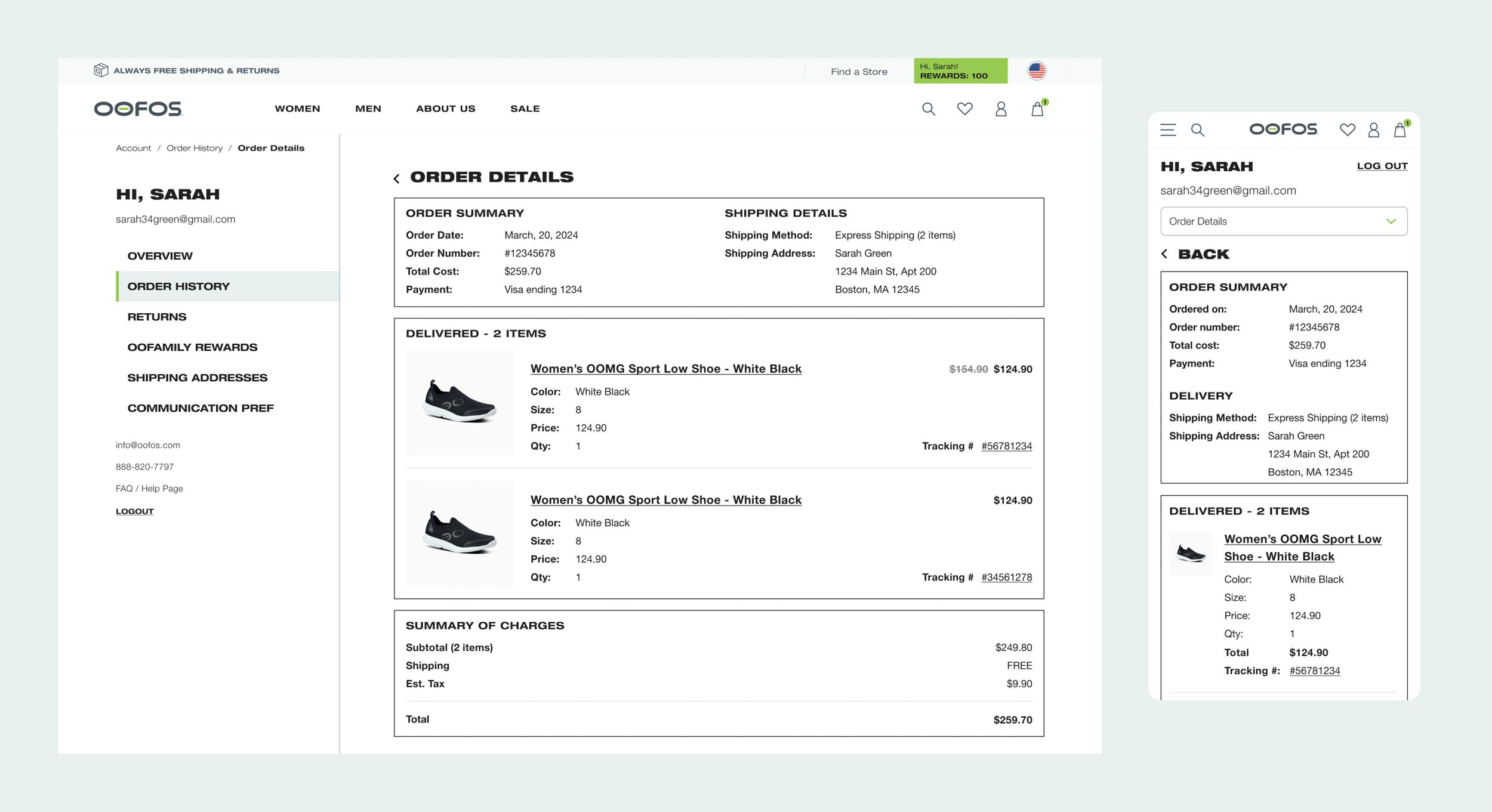
Account Dashboard
We added additional functionality for customers to track their packages, order products again, and update account information.
-
![]()
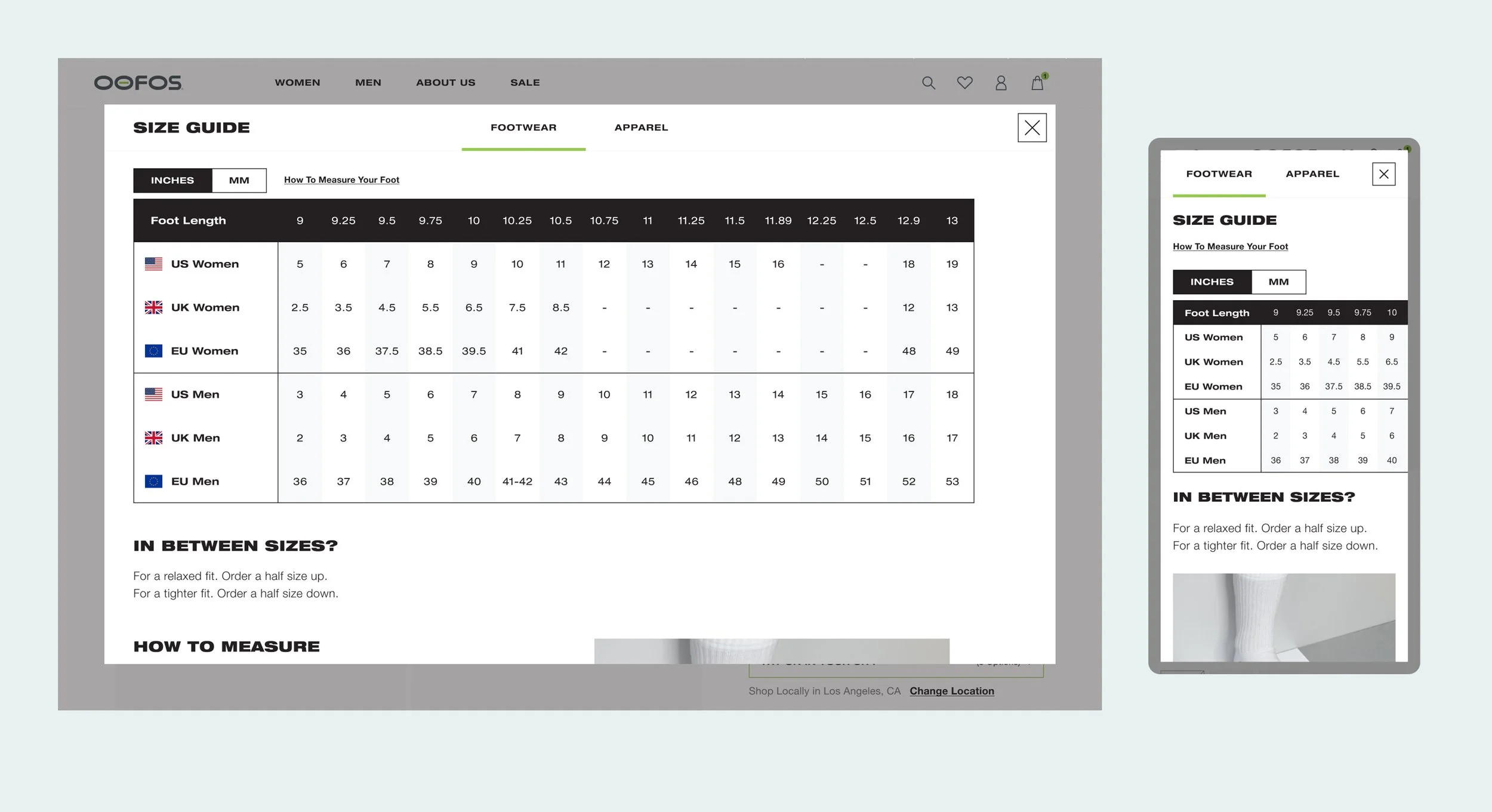
Size Guide
Each OOFOS shoe type and apparel product fits slightly differently so we created a template for each type unique size guide.

UI Kit


The UI Kit organizes a range of elements from type, color, buttons and components across the site. All designed with ADA compliance and developers in mind to make a seamless handoff to ship the site.
Release And Evolve
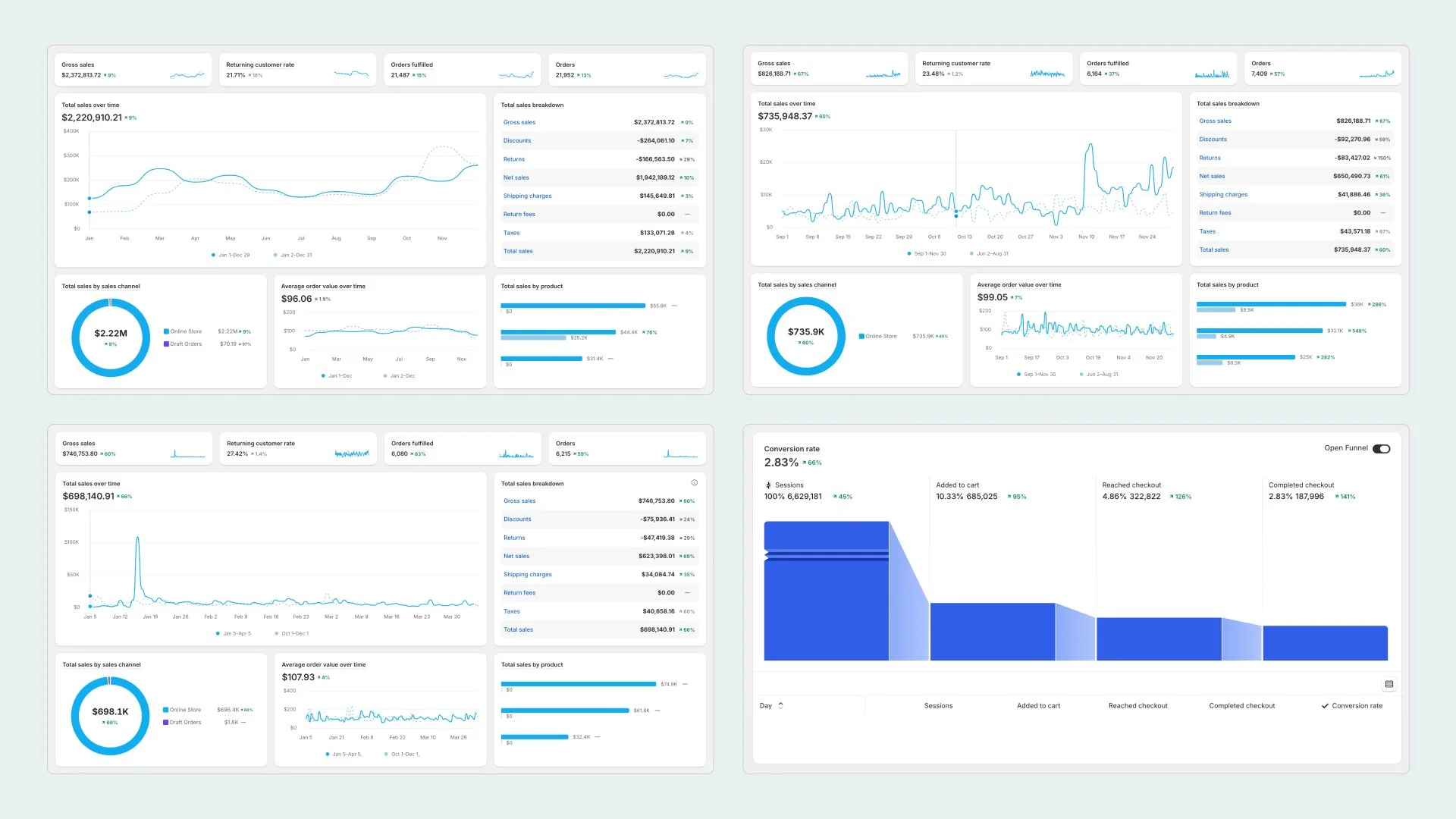
A/B Testing
We deployed improvements in phases, A/B testing each major component against the existing experience to validate decisions before scaling. Conversion rate, average order value, and returning customer metrics guided prioritization between phases, with micro-interaction refinements made based on observed behavior patterns. Early results showed positive results with no decline in baseline conversions, confirming the phased approach was the right call.
Release And Evolve
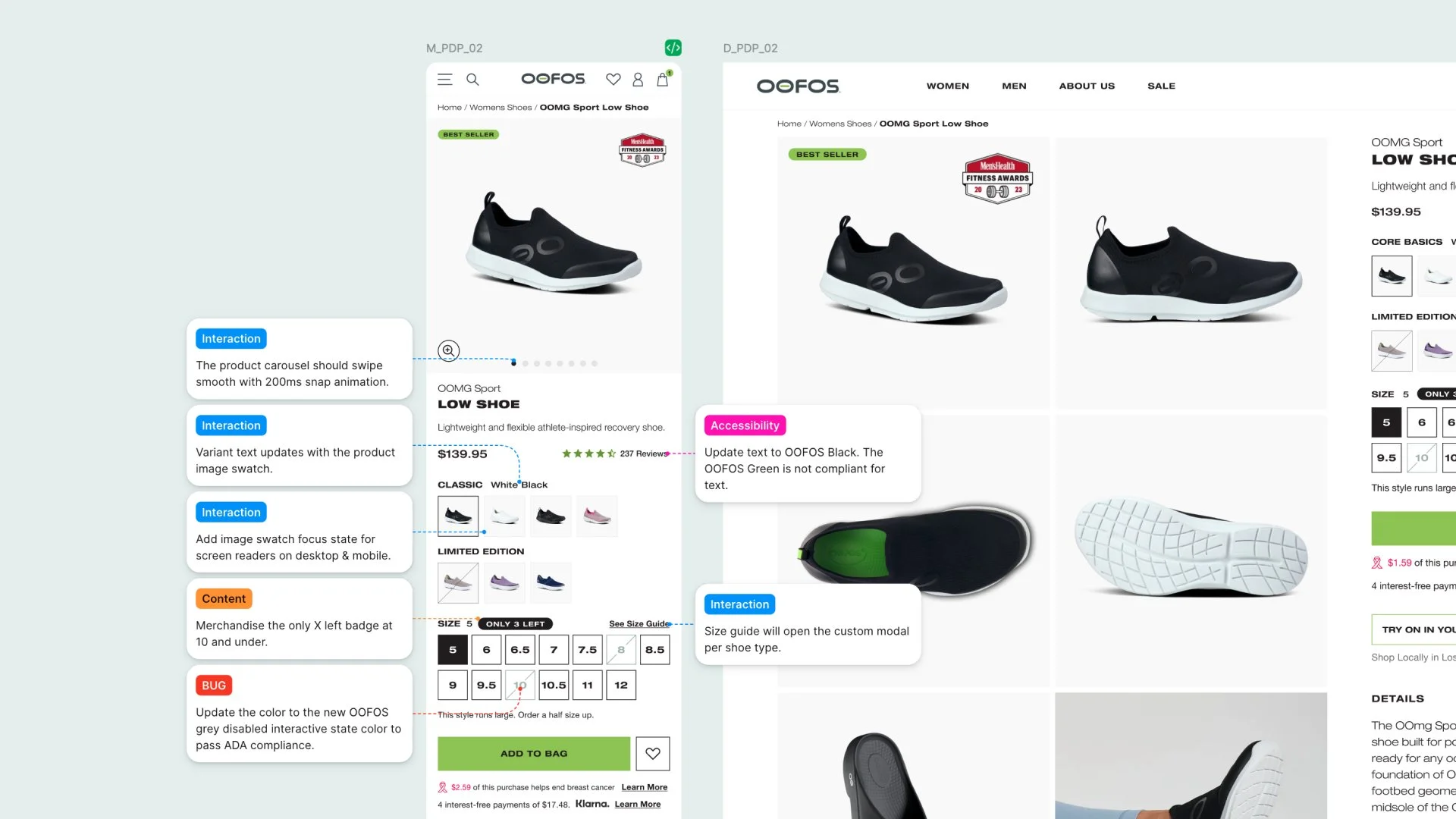
Design QA
Detailed annotations and specifications gave engineers a clear reference for each phase of development, reducing ambiguity and catching issues before they reached production. Design QA covered browsers, devices, responsive breakpoints, interaction states, and accessibility compliance at every stage, which was especially critical given the legal risk identified in the audit. The process kept each phase aligned with the design vision and supported a rollout with fewer revision cycles as improvements compounded over time.
Results
Metrics
43% increase in returning customer rate
49% increase in total sales
14% increase in average order value
Conclusion
Balancing urgent ADA compliance with high-impact UX optimizations helped OOFOS transform legal risk into sustainable growth. We validated every major design shift through A/B testing to ensure that we maximized our monthly budget by focusing on streamlining the shopping experience. By exceeding all sales and conversion targets, we transformed the engagement into a long-term optimization partnership. This success led to a multi-year retainer extension where I continue to optimize the OOFOS storefront.
Challenges
Balancing quick wins with longer term improvements required more investment and stakeholder patience
Translating analytics and audit findings into a action plan that stakeholders with varying levels of product literacy could support
Lessons Learned
Building a framework around impact, kept the team focused and made budget conversations more objective than subjective
Consistent monthly optimizations validated through testing compounded over time, outpacing a large redesign
Future Recommendations
Loyalty Program
Create a loyalty experience that rewards OOFOS's high returning customer rate, giving repeat customers a reason to come back through points, discounts, and early access to new releases
Product Education
Develop richer content on product detail pages that connects OOFoam technology to specific recovery outcomes, helping new customers understand the science behind the products
Personalized Recommendations
Use purchase history and browsing behavior to surface personalized product recommendations for returning customers
Admin Customization Tools
Build out admin settings to give the OOFOS team greater control over campaign launches and product releases, reducing reliance on development resources